Guide · Syros, Cyclades
How to read a neoclassical town
Published
In short
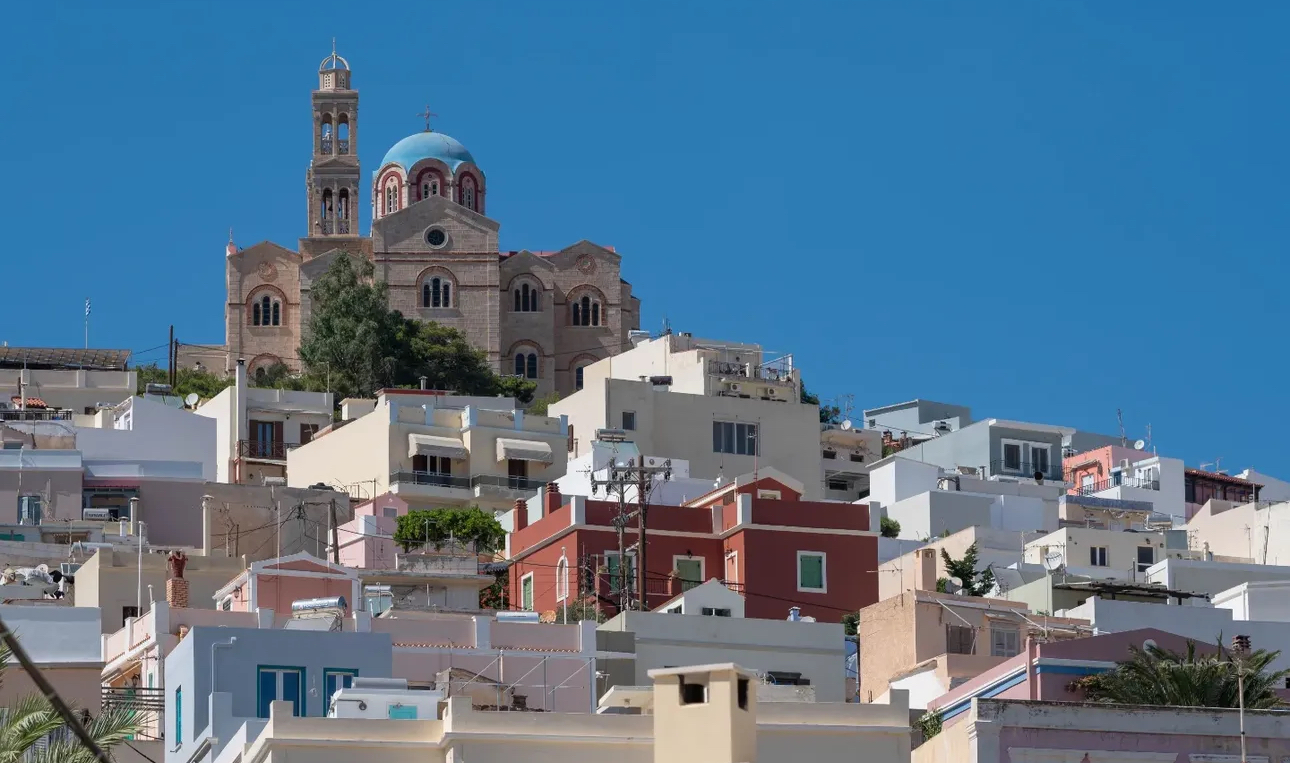
Ermoupoli grew rapidly in the 19th century as a merchant and shipping town, and its marble squares, civic buildings and captains' mansions still show it. To see it well, walk slowly from Miaouli Square to the Vaporia quarter, look up at façades, balconies and ceilings, and check opening times locally before planning to go inside any building.
Chapter 01
Why Ermoupoli looks the way it does
Ermoupoli — the town of Hermes, god of commerce — was founded in the 1820s, when refugees from other Aegean islands settled around the harbour during the Greek War of Independence. Trade and shipping made it one of the most important ports of the new Greek state for much of the 19th century.
That wealth was spent on stone. Merchants and ship-owners built in the neoclassical style fashionable at the time: symmetrical façades, pediments, pilasters, marble steps and wrought-iron balconies. The result is a town that feels more like a small European capital than a typical Cycladic village.
Chapter 02
What to look for on a walk
- FaçadesSymmetry, pediments over windows, and pilasters framing the corners.
- BalconiesMarble slabs on carved brackets, with decorative iron railings.
- DoorwaysTall wooden doors, fanlights and marble thresholds worn by use.
- CeilingsWhere you can see inside, look up: painted and vaulted ceilings were a mark of status.
- PavingMarble-paved squares and lanes, especially around the civic centre.
Chapter 03
Key places to include
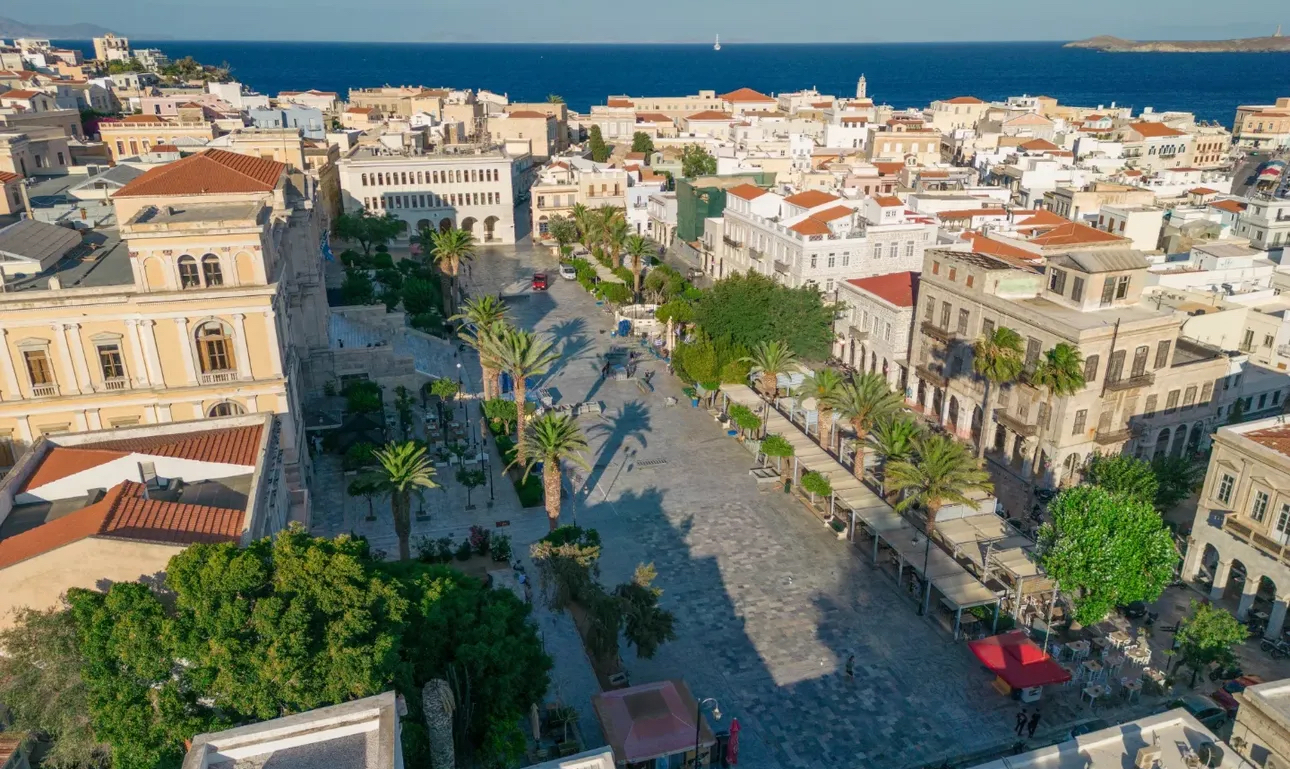
Miaouli Square is the civic heart, dominated by the Town Hall designed by Ernst Ziller. Nearby, the Apollo Theatre is often compared to the opera houses of Italy. In the Vaporia quarter, the captains' mansions face the sea above the rocks, with the church of Agios Nikolaos close by.
Opening hours for theatres, churches and museums change, and some buildings are private homes. Check current hours locally before planning a visit inside, and respect residents when photographing doorways and balconies.
Chapter 04
Staying inside the story
Syra di Giovanni 1862 is one of these houses: a residence dating from 1862, restored as three suites. Amorosa keeps a vaulted ceiling salon; Aurelia keeps its double-height living room and tall shuttered windows. Staying in the town lets you walk at quiet hours, when the façades are at their best.
If you want to explore the history in depth, mention it when you request your dates — the owner can share the story of the house itself.
Chapter 05
A slow architecture walk, in order
- 1. Miaouli SquareStart with the Town Hall and the marble square around it.
- 2. Theatre and civic streetsWalk the streets around the Apollo Theatre and look up at façades.
- 3. VaporiaContinue to the captains' mansions above the sea.
- 4. The harbourFinish at the waterfront, where the town's trade began.
Questions
Frequently asked
- When was Ermoupoli founded?
- In the 1820s, by refugees who settled around the harbour during the Greek War of Independence. The town grew rapidly as a trading port through the 19th century.
- Can I visit the Apollo Theatre?
- Visiting arrangements and performance dates change. Check current information locally before planning your day around it.
- Is Syra di Giovanni 1862 a historic building?
- Yes. The residence dates from 1862 and has been restored as three suites, each with its own kitchen and living room.
Continue reading
Reservations
Read this — then come stay.
Three suites in a restored 1862 mansion, in the heart of Ermoupoli. Availability is confirmed personally by the owner.